

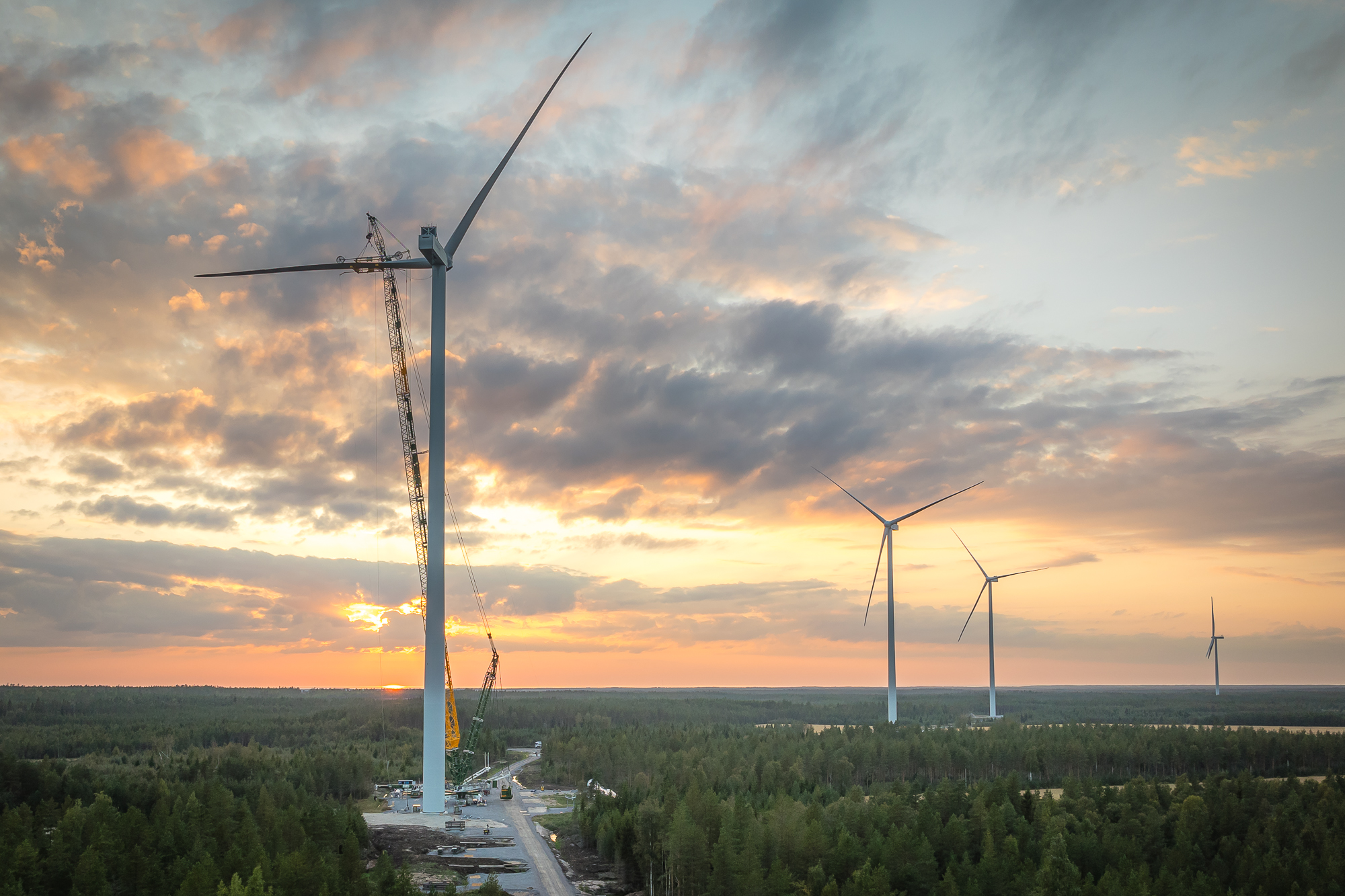
Suomen Hyötytuuli Oy, founded in 1998, is one of Finland’s largest wind power companies, with a generation capacity of 654 MW. The company operates ten wind farms across Finland, including sites on the west coast, in North and Central Ostrobothnia, and in Pori, which is home to Finland’s only offshore wind farm. The company is owned by Oy Mankala Ab, Vantaan Energia, Tampereen Energia, Turku Energia, Lahti Energia, Lappeenrannan Energia, Alva-yhtiöt (Jyväskylä) and Pori Energia.
“The wind power market is evolving rapidly. Finland’s wind power capacity is approaching 10 GW. Electricity prices remain competitive by European standards, and renewable power has a significant impact on the market,” says Ristomatti Lummikko, Director of Energy at Suomen Hyötytuuli.
In spring 2026, Suomen Hyötytuuli was preparing to take on a new role in the energy market. The company decided to take responsibility for its own balance management and electricity trading to further develop its electricity market operations. Its strategic objective, rooted in the company’s values, was to remain a frontrunner in the industry.
“When we became a market participant, every process related to electricity trading—from data communications and system integrations to contracts—had to be redesigned or built from scratch,” says Miia Suuriniemi, Development Manager at Suomen Hyötytuuli, who led the transformation project.
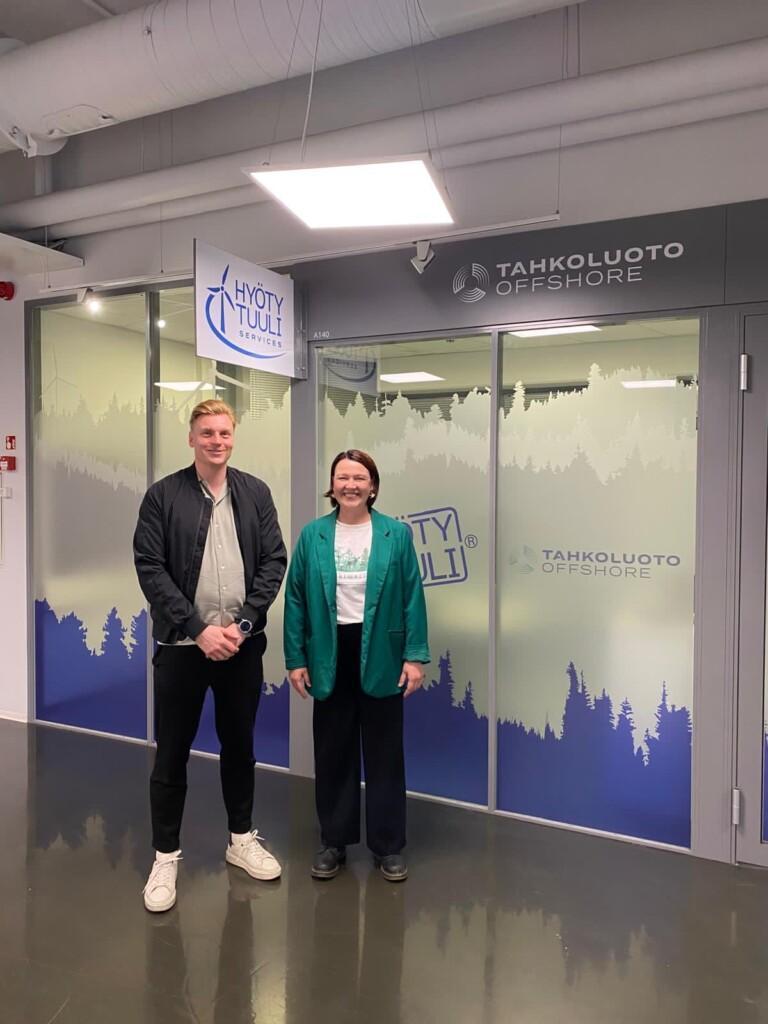
Suomen Hyötytuuli’s Development Manager Miia Suuriniemi and Director of Energy Ristomatti Lummikko are satisfied with the project’s efficient implementation.
Driving a productivity leap in wind power generation
Renewable energy producers must respond immediately to market price signals. Effective balance management is a critical success factor, and maximizing production value requires continuous participation in the most profitable market. This demands a fully automated, real-time operational environment that integrates trading, automation, reporting, and balance management. Suomen Hyötytuuli selected Power-Deriva as its partner following a competitive tendering process. Power-Deriva’s extensive experience and broad range of services made the company the ideal partner for the project.
The starting point was challenging. Processes used by wind farm operators, commercial counterparties, and forecasting service providers needed to be integrated into a single workflow. The Mankala model, which allocates costs and revenues by ownership, was implemented across ten wind farms, eight owner companies, and multiple share classes. Reporting and billing required specialized expertise, and personnel had to adapt to new models.
The project was equally significant for Power-Deriva.
“We had previous experience with wind power projects, but the scale of this project was on a completely different level. The timeline was demanding, so we got to work immediately,” says Mika Laakkonen, CEO of PD Power Oy.
How a wind power producer became a market participant
In the process developed by Power-Deriva, forecasts and realised market prices direct trading to the most profitable market at any given time. This generates a real-time control signal for wind farm automation.
The service package includes Day-Ahead (DA) price forecasting, reserve market trading, algorithm-based Intraday (ID) trading, multi-market optimization, balance settlement, reporting, shareholder billing, and system services. Power-Deriva’s 24/7 control room in Harjavalta monitors the operations.
Main project phases:
- Market participant implementation: The project began by defining Suomen Hyötytuuli’s new role as a direct market participant, establishing the required commercial interfaces with electricity exchanges, and concluding balance responsibility agreements with Fingrid.
- Real-time data integration: Suomen Hyötytuuli’s systems were integrated with trading platforms and production control systems, enabling real-time data exchange in line with market schedules.
- Multi-market optimisation and automation deployment: The system forecasts prices and production, selects the most profitable market using algorithms, automates trading and sends real-time control signals to wind farms. Balance settlement, reporting and billing are also automated.
- Mankala reporting and shareholder billing: Power-Deriva developed a reporting and calculation model covering ten wind farms, eight owner companies, all share classes, and the cost and revenue allocation of the Mankala structure.
- 24/7 control room: Power-Deriva’s control room in Harjavalta monitors trading, production and markets around the clock.
“Working with Power-Deriva has been straightforward. We described the challenge, and Power-Deriva came up with a solution,” Lummikko says.
Taking control of energy market operations in three months
As a result of the project, Suomen Hyötytuuli achieved full market-driven operation, enhanced balance management capabilities and an independent role in the electricity market. Algorithm-based trading now operates around the clock, multi-market optimisation maximises the value of wind power production, and balance management has improved significantly. Mankala reporting and shareholder billing are handled automatically. As forecasts change, wind power sales can be redirected between markets, with price and production forecasts determining the most profitable market at any given time. The entire trading chain, from forecasting to settlement, is automated, allowing Suomen Hyötytuuli to focus on producing wind power while trading operations run seamlessly in the background.
“Power-Deriva is responsible for the operational management of electricity trading. Based on the trading outcome, a control signal is generated and transmitted to the wind farms’ control systems. Our responsibility covers the commercial side of trading and the generation of the control signal, while a third party is responsible for the wind farms’ control systems and automation,” says Maria Vehmaan-Kreula, Application Specialist at Power-Deriva.
“From an implementation standpoint, the greatest achievement was delivering the project on such a tight schedule. Becoming a Balance Responsible Party (BRP) was one of the most significant transformations in our company’s history,” says Suuriniemi.
The project was a valuable learning experience for both organisations. Perhaps the most significant insight was that effective balance management is vital to the success of wind power generation. Wind conditions do not align with market schedules, and any imbalance affects profitability.
“I have learned a great deal throughout the project, and so has the rest of our organisation. Our next areas for development include refining our trading strategy and making even better use of reserve markets,” Lummikko says.
“This is only the beginning of the story,” Laakkonen concludes.
Article images: Suomen Hyötytuuli Oy
Key customer benefits
- Algorithms optimize the value of wind power generation in real time.
- Improved balance management reduces imbalance costs from forecast errors and improves profitability.
- Automated trading, reporting, and billing save time and money while reducing manual errors.
- Successful implementation of a major operational transformation in three months.
- Close collaboration during implementation and ongoing development ensures that solutions meet evolving business needs.